
Taste calls on every sense. The tongue is nothing without the nose, nothing without its whole sensory retinue: a miserable cold will throw off your palate the second it blocks your nose.
What of the eyes? Naturally, the first taste of a dish comes from its sight. Plating is the signature box, whether Cartier red, Hermès orange or Tiffany blue: the essential accessory of any grand table.
And our ears? With a little training, one can be made to salivate at the ring of a bell, or, failing that, at the glorious bubbling song of cassoulet rising from the oven.
Touch matters too: who likes their gazpacho hot? (if you just cringed, know that it pained me even more to write it) In India, a touch of crunch sprinkled over a soft dish, however fiery, is a must that travels rather well to our shores.
Summon all your senses
Make taste your trade and you will have no choice but to summon all five senses at your desk.
Picture yourself as a wine journalist: your editor has entrusted you with describing, one by one, forty-seven Bordeaux wines. Same sunless vintage, same bank of the Gironde (the left one, the Médoc) and so, broadly speaking, the same blend: dominated by cabernet sauvignon, rounded out with a handful of merlot, a spoonful of cabernet franc and, perhaps, a pinch of petit verdot. Once you are done with the first, its aromas of green pepper, of black and red fruit, its slightly dominant oak, its gritty tannins and medium-high acidity, you are only left with forty-six more portraits to paint.
At 300 signs a wine, roughly fifty words, that is not far off 2,500 words to spend, slaloming between repetitions all the way. You will soon wear out your vegetable patch and your herbarium in breathless efforts to vary the register.
So yes, mouthfeel matters, and the musical metaphor is unavoidable: Ah! The gentle melody of a well-bred wine, its tannins pleasantly clawing through an early-summer undergrowth, humming (without quite naming it) of wild strawberry on a bed of freshly-cut wayward grass. Fresh, joyful and lively, cut out for a happy marriage with a bavette and its green pepper sauce. (Exactly 300 signs. Yep!That’s how it’s done!)
Let the picture unfurl and bring out its message
Every wine journalist, then, dreams of inventing a wholly new way to describe wine. Metaphors are risky. I remember one French wine writer describing the nose of the wine as “reminiscent of a hare’s belly after the storm”. I would not recommend smelling a hare intentionnally (least of all its belly) under any weather condition, you can believe me, hare smells very very strong.
The English (namely the Wine and Spirit Education Trust, a.k.a. WSET) gave us an assessment system of precise criteria for sight, nose and palate, rating intensity and complexity on the nose, completed by acidity, tannin and length on the palate, with markers of quality running from low to high via medium, nuanced with a plus or a minus. This commendable effort at objectivity however results in scores fit to bore the most passionnate accountant.
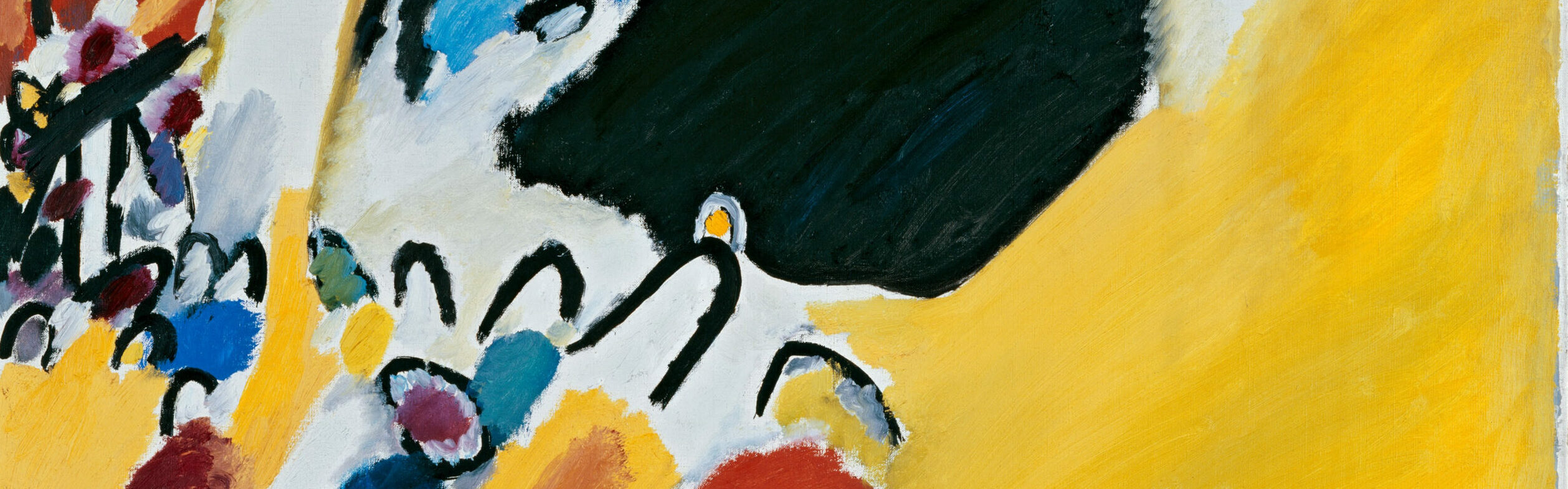
As for me, when I put my nose in a glass of wine, I like to close my eyes and watch the aromas dot an impressionist canvas with colour.
Further afield
Sarah Heller MW is as much a painter as a Master of Wine. She signs off with fascinating Visual Tasting Notes. See them on her Instagram →
And in her column for Gambero Rosso, Diario di una Master of Wine, where tasting and drawing talk to each other.
Of course, in a red wine, ripe fruit conjures black and red (one thinks of prune, of blueberry, of strawberry, fresh or stewed), brown too (for toast, for vanilla, if the wine has seen oak)… The trick is to move past tasting by analogy, to step away from the colour of fruit and matter, and let the picture unfurl, then to look at the canvas in its complexity, and ask how to describe it, how to capture its energy, its message.
This approach, born with wine, now presides quite naturally over my cups of tea, my plates, in the wake of a perfume… I compose a dish the way I compose an outfit: it needs harmony, a complementarity of texture and flavour. Contrasts throw down thrilling challenges, to be taken up with poise. A touch of madness does not merely suffice: when it strikes just right, it wins the day!
Following so far? Let’s get cracking.
Leave a Reply